

By Farhan Ur Rehman Khan
A student finally starts doing well in a classroom.
They are participating more. They are finishing their work. They seem less overwhelmed. Maybe the number of difficult days has dropped, and everyone involved is relieved to see it.
Then, sooner or later, someone may ask:
“Do they still need that accommodation?”
It is a fair question. People’s needs change. Children grow. Adults develop new skills. Environments change, too. An accommodation that was essential at one point may eventually become unnecessary or may need to look different.
But there is another possibility that is easy to overlook:
Maybe the person is doing better because the accommodation is working.
If that is the case, success isn’t necessarily evidence that the support has done its job and can now be removed. The support may actually be part of what is making that success possible.
That distinction matters in classrooms, workplaces, families and other environments where accommodations are used to reduce barriers and improve participation.
When Support Works, Why Do We Take It Away?
There is a tendency to think of accommodations as temporary bridges.
Someone is struggling, so we provide extra support. They improve, so we gradually take the support away. Eventually, the assumption goes, they should be able to manage without it.
Sometimes that progression is appropriate.
But it becomes a problem when improvement itself becomes the reason for removing the accommodation.
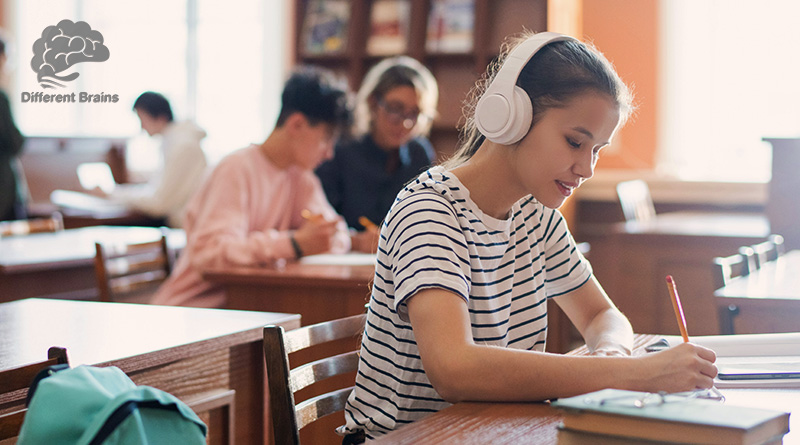
Consider a student who becomes overwhelmed by noise in a busy classroom. Noise-reducing headphones help the student concentrate, participate and remain in the classroom.
Six months later, the student is doing much better.
What changed?
Perhaps the student’s sensory needs changed. Perhaps the classroom became quieter. Perhaps the student developed new coping strategies.
Or perhaps the headphones are still doing exactly what they were doing six months earlier: reducing a barrier that makes the classroom harder to navigate.
The fact that the student can now participate successfully with the headphones doesn’t tell us what would happen without them.
This idea is consistent with Universal Design for Learning (UDL), a framework developed by CAST that focuses on anticipating learner variability and reducing barriers so learners can access meaningful and challenging learning opportunities.
And there is an important distinction here:
Reducing a barrier is not the same as lowering the expectation.
Giving a student a different way to access information does not necessarily mean asking less of them. Sometimes it simply removes an obstacle that was never part of the learning goal in the first place.
An Accommodation Is Not a Failure of Independence
Accommodations can sometimes be viewed as “training wheels.”
The thinking is understandable: if someone becomes more capable, shouldn’t they eventually be able to take the training wheels off?
But not every accommodation works that way.
A person can be capable, independent and highly successful while continuing to use particular tools or supports.
A student who receives additional time on a test because processing written information takes longer isn’t necessarily avoiding the challenge. The additional time may simply allow the student to demonstrate what they know without processing speed becoming an unnecessary barrier.
An employee who receives important instructions in writing rather than only verbally isn’t necessarily less competent. Written instructions may simply provide a more reliable way to process, organize and revisit information.
The accommodation isn’t doing the work.
It is helping the person access the work.
That distinction also appears in U.S. Department of Education guidance concerning auxiliary aids and services for students with disabilities. The guidance emphasizes that an aid needs to be effective for the particular student and notes that students with similar disabilities may not necessarily benefit equally from the same support.
That is a useful principle beyond higher education, too: the question should be whether a support is effective for the person using it, not whether it looks like something they should have “outgrown.”
Research on Universal Design for Learning also suggests that support and independence do not have to be opposing concepts. A systematic review of UDL interventions involving students with intellectual disabilities found positive academic, social and behavioral outcomes across the seven studies it reviewed, while also calling for more research and larger study populations.
Independence does not necessarily mean doing everything without help.
It can mean knowing what works for you, knowing when you need it, being able to ask for it, and using it effectively.
What Can Happen When Successful Support Is Removed?
This is where things can become difficult to see from the outside.
Imagine that a student has been using a visual schedule throughout the school day. It helps them understand what is coming next and reduces the uncertainty around transitions.
Eventually, someone decides they seem ready to manage without it.
The student still gets through the day.
But perhaps they now need more reminders. Maybe transitions take longer. Maybe they become increasingly tired by the afternoon. Maybe they hold everything together at school and then fall apart once they get home.
None of those things necessarily prove that removing the schedule was the cause.
But they are worth paying attention to.
Looking okay and actually finding something manageable are not always the same thing.
This matters particularly when thinking about autistic people and masking or camouflaging. Research has examined the ways autistic people may suppress, hide or compensate for characteristics in order to navigate social situations. Research has also found associations between higher levels of camouflaging and poorer mental-health outcomes, although the relationship is complex and should not be reduced to a simple cause-and-effect explanation.
That doesn’t mean removing an accommodation automatically causes someone to mask.
It doesn’t mean every person who appears to cope is secretly struggling.
It does mean that visible performance is only one piece of information.
A person may be completing their assignments while using considerably more energy to do so. An employee may continue meeting deadlines while becoming increasingly exhausted. A child may appear calm in class but have little energy left by the time they get home.
Sometimes the cost of coping is simply less visible than the success.
That is one reason accommodation decisions deserve more thought than a simple “They seem fine now.”
Growth Does Not Always Mean Needing Less Support
None of this means people cannot grow.
They can, and they do.
A child who once needed a visual schedule for every transition may eventually use one only when routines change. An autistic adult who once preferred written communication in most situations may become comfortable with verbal communication in familiar settings while still preferring written information for complex or stressful conversations.
Those changes can be meaningful signs of growth.
But growth does not always mean fewer accommodations.
Sometimes growth means more choices.
A person may become better at recognizing when they need headphones rather than waiting until they are overwhelmed. They may become more comfortable asking for extra processing time. They may learn to explain why a particular communication approach works better for them.
Those are forms of independence too.
This is also why accommodation decisions need to be individualized.
Two people with the same diagnosis may have very different sensory, communication, executive-function or learning needs. Even the same person may need different accommodations in different environments.
A student may manage perfectly well in a quiet classroom but need headphones during a school assembly.
An employee may handle spontaneous conversations comfortably with familiar colleagues but benefit from written follow-up after a complicated meeting.
Federal special-education rules reflect this individualized approach. An IEP is supposed to address a child’s individual needs and include supplementary aids, services and supports that enable the child to make progress in the general curriculum and participate in school activities.
So the question isn’t simply:
“Can this person do it without the accommodation?”
A better question might be:
“What helps this person participate successfully, sustainably and with as much choice as possible?”
When Should an Accommodation Change?
Accommodations shouldn’t be treated as permanent simply because they were once helpful.
They also shouldn’t be removed simply because they have been successful.
A thoughtful review can ask:
- Is the accommodation still addressing a real barrier?
- Does the person still find it useful?
- Has the environment changed?
- Have the person’s needs or preferences changed?
- Is another approach now more effective?
- Could the accommodation be adjusted without reducing access or participation?
- Does the person want to try a change?
- What happens if the support is reduced?
That last question deserves particular care.
If a school, family or workplace wants to try changing an accommodation, the goal shouldn’t be to prove that the person can survive without it.
The goal should be to learn something.
Maybe the person’s needs have changed.
Maybe the accommodation needs to be modified.
Maybe another support works better.
Or maybe the original accommodation is still exactly what the person needs.
And if an experiment doesn’t work, going back to the previous accommodation shouldn’t be treated as failure.
It is information.
There is also no requirement that every accommodation must eventually disappear.
Some supports may be needed for a short period. Others may be useful only in particular situations. Some may remain valuable for years.
The right question is not how quickly we can eliminate support.
It is whether the support continues to help the person access, participate and function in the environment around them.
Let the Person Help Decide
Whenever possible, the person receiving an accommodation should have a meaningful voice in decisions about it.
For a child, that might mean asking:
“What makes this classroom easier for you?”
“When do you notice that you need your headphones?”
“Would you like to try something different?”
For an adult, the conversation can be even more direct:
What works? What doesn’t? What would you like to change?
This isn’t simply about being polite or giving someone a say because it feels good.
The person using the accommodation often knows something that an observer cannot see.
They know whether the headphones prevent sensory overload or merely make a difficult environment somewhat easier.
They know whether written instructions provide clarity or whether they have become unnecessary.
They know whether a particular accommodation gives them greater freedom or whether another approach would work better.
Research on self-determination has increasingly emphasized its importance for inclusion, psychological growth and wellbeing among people with intellectual and developmental disabilities. A 2024 review of the field also highlights the importance of strengths-based approaches and support during transitions from school to adult life.
Earlier intervention research has also found greater growth in self-determination among students who participated in structured self-determination interventions.
Giving a person a voice in accommodation decisions does not mean every decision has to be handed entirely to a child or student.
Parents, teachers and professionals still have important responsibilities.
But whenever possible, the person receiving the support should be more than a passive participant in the conversation.
Their experience is evidence too.
A Better Measure of Independence
Perhaps the bigger question is how we define independence.
If independence means never needing support, almost everyone will fall short eventually.
People use glasses. They rely on calendars, navigation apps, accessibility features, hearing aids, medication reminders, workplace tools and countless other forms of assistance.
We don’t generally look at those tools and conclude that the person has failed to become independent.
So why should an accommodation automatically be treated as something that needs to disappear?
A more useful measure might be whether a person can understand their needs, identify useful supports, communicate those needs, make choices and participate meaningfully in the parts of life that matter to them.
That idea also fits with the way disability education frameworks approach individualized support. IDEA requires IEPs to address individual needs and participation, rather than treating disability support as a one-size-fits-all process.
By that definition, continuing to use an accommodation can sometimes be an expression of independence rather than its opposite.
An autistic employee who knows that written workflows help organize complex responsibilities is demonstrating self-knowledge.
A student who recognizes that headphones help them stay focused in a noisy environment is learning how to manage their surroundings.
A child who asks for advance notice before a transition is developing self-advocacy.
Those are not failures to become independent.
They are skills worth encouraging.
The next time an accommodation is working particularly well, perhaps the first question shouldn’t be:
“When can we take this away?”
Instead, we might ask:
“What is this support making possible?”
If it is helping someone learn, communicate, participate or function with less unnecessary difficulty, its success may be a reason to understand the support more carefully before deciding whether it should change.
Sometimes an accommodation is a temporary bridge.
Sometimes it changes as a person’s needs change.
And sometimes, the accommodation remains part of the person’s toolkit for a very long time.
That isn’t necessarily a sign that progress stopped. It may be a sign that the support is doing exactly what it was meant to do.
Sources
- CAST. Universal Design for Learning (UDL). https://www.cast.org/what-we-do/universal-design-for-learning/
- AlRawi, J. M., & AlKahtani, M. A. Universal design for learning for educating students with intellectual disabilities: A systematic review. https://pmc.ncbi.nlm.nih.gov/articles/PMC9788711/
- U.S. Department of Education, Office for Civil Rights. Auxiliary Aids and Services for Postsecondary Students with Disabilities. https://www.ed.gov/laws-and-policy/individuals-disabilities/auxiliary-aids-and-services-for-postsecondary-students-with-disabilities
- U.S. Department of Education. Individuals with Disabilities Education Act — Definition of Individualized Education Program, Section 300.320. https://sites.ed.gov/idea/regs/b/d/300.320
- Burke, K. M., et al. Self-Determination Research: Current and Future Directions. 2024. https://pmc.ncbi.nlm.nih.gov/articles/PMC11274213/
- A meta-ethnography of autistic people’s experiences of social camouflaging and its relationship with mental health. https://pmc.ncbi.nlm.nih.gov/articles/PMC11134975/
About the Author
Farhan Ur Rehman Khan is the founder and author of Health Info Guides, where he creates practical, evidence-informed resources on health, wellbeing, and autism support for families, educators, and communities. Learn more at: www.healthinfoguides.com